Birds singing woke me, beating my phone alarm to it. As the shadow line of the eastern horizon crept down from the rookery toward the tree trunks, the corvids begin warming up their vocal cords. Erratic caws, a few short flights around the tree tops, wing stretches in the first sunlight.
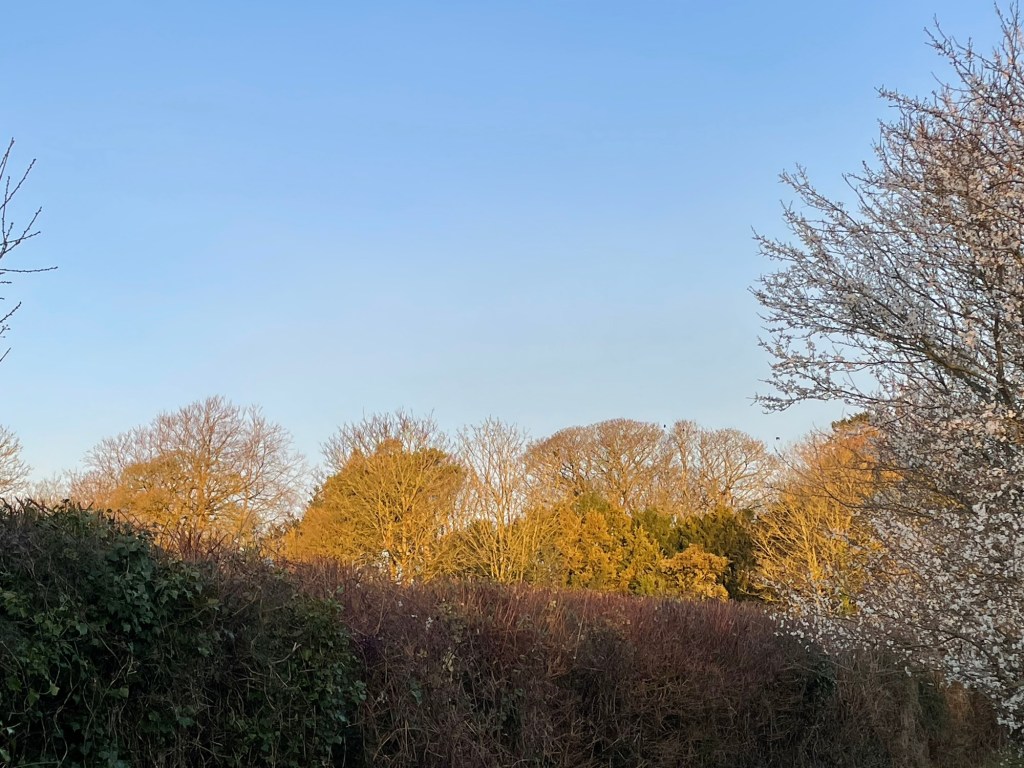
I never get tired of listening to these conversational characters, muttering and clacking. It must be nest building time, or close to it, as the rookery is never fully vacated during the day. There is always some movement up there at the moment. Comings and goings, flapping and croaking. The cusp of spring is the best time to watch them.
A Green Finch makes its presence felt from the silver birch with its repeated, sustained, low-key screeches. The laugh of a Green Woodpecker stretches out across Peace Field, then again toward the developing woodland, down to the north side of the site. Then Blue Tits in twittering pairs, flitting along and through the hedges. As the Sun emerges fully from below the hill, a Robin launches into an extended melody, then as if as a counter-point, a Dunnock throws out several verses of its own.
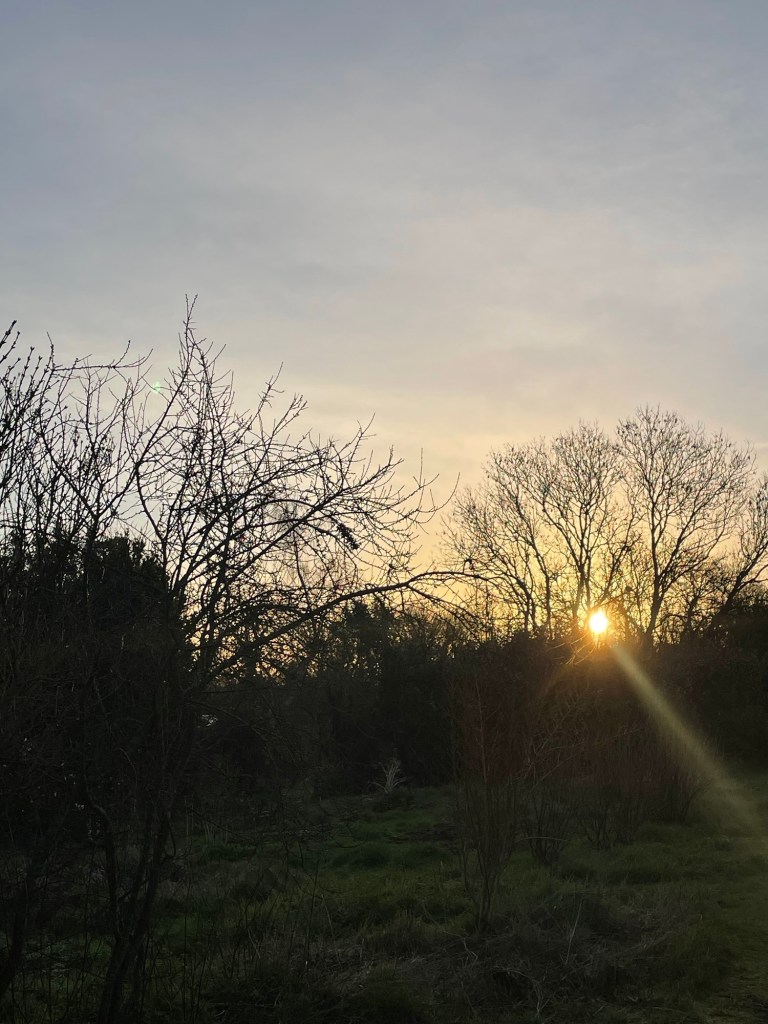
With all this singing, amid emerging cherry blossoms, the sunshine, daffodils raising their heads, the dawn could not be more hopeful.
Four of us gather to plot out the day’s main task with light hearts, mugs of tea to hand. The job is to thin out, then reduce the height of an enormous fig tree. It must be close to six metres tall, spreading out where its bare branches curl out at grass level, as if a skirt, covering close to two-thirds that of a football centre-circle.
Two of us work at this carefully. Protecting the prospective leaf canopy, which is yet to develop beyond tiny buds on the end of twigs spreading like the fingers of an open hand, is our concern. In thinning the tree, we look for crossing branches, duplicate, or parallel branching, all of which can be rationalised without leaving holes. The cutting process to prevent a branch being torn, starts with an upward cut through the underside of the limb. Cutting about a quarter, to a third, up through the bark, is enough to allow the downward cut to begin. This cut is made a little up the branch, further out than the upper-cut. Then, when the branch falls, there is a clean step left behind, no tearing. It is then possible to carry out a simple tidying cut close to the new end of the fore-shortened branch, so that a sheer face is left. This tidying produces slim off-cuts that look like they might be fashioned into high-backed chairs for a doll’s house.
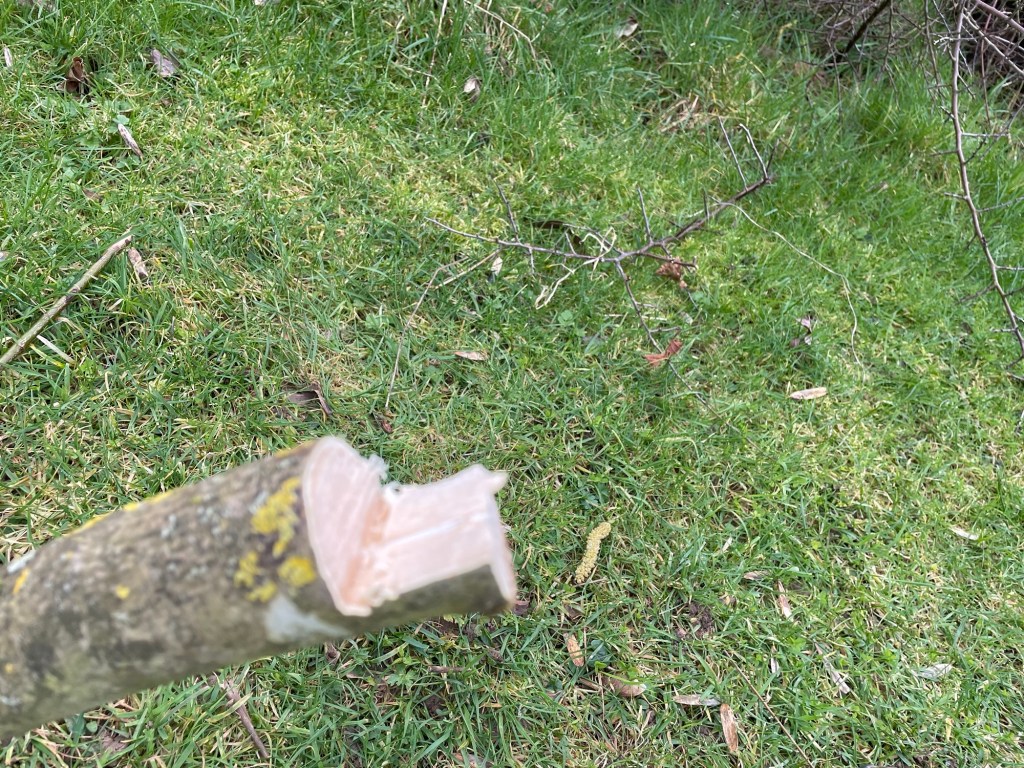
This work, with one up a ladder wielding a miniature one-hand, battery powered chainsaw and the other at ground level advising, or confirming where cuts ought be made, needs patience, calm and gentle debate. When agreement is reached, the little chainsaw whirrs into action, then the branch is cleared, before the next cut is considered. Finally, after a lunch break, the last few boughs are dealt with and the debris is hauled away. The fig tree retains its overall form, but with air and room to breathe within.
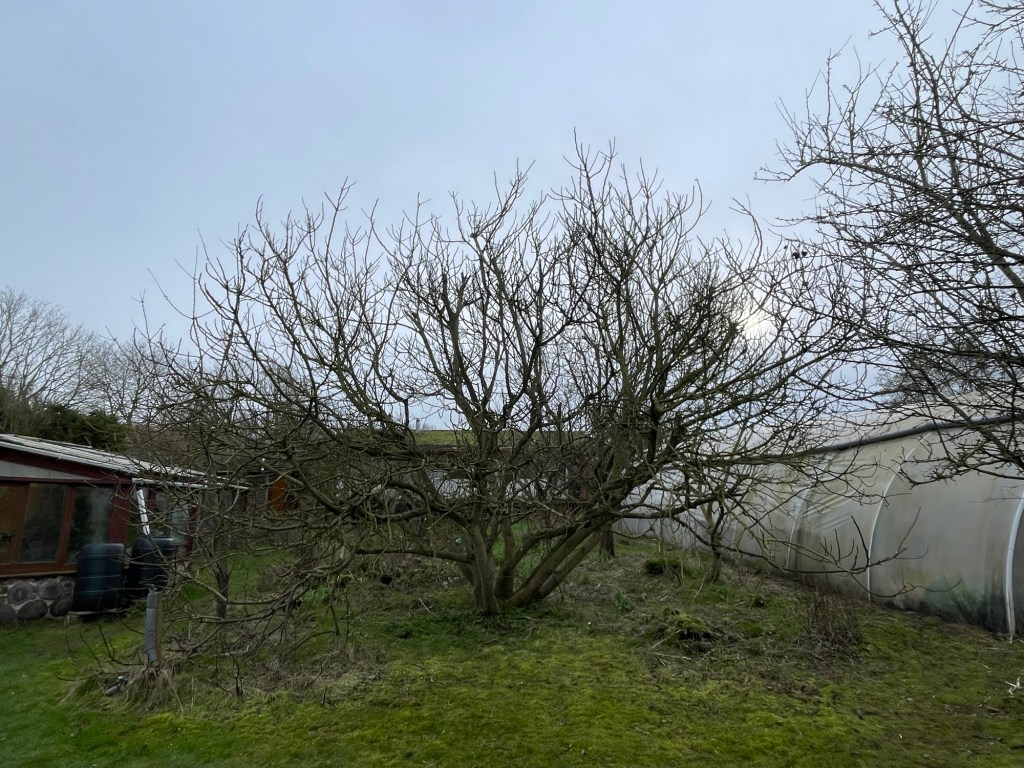
Last year the fig crop was bountiful, the best known here. This year’s the harvest looks less likely to be as rich. There are few fruit buds apparent at the moment.
Besides the gentle focus on the work and the brief bursts of the pruning machine, there is no more birdsong audible today. The early sunshine, turned milky as thin cloud thickened, then settled as total cloud cover. A permanent sense of twilight, a falling temperature, with a suggestion of imminent rain, dampened the lively spirits of the birds. Only a chirrup here and there from a hedge, or a brief burble from the nearby chicken coop was heard. A Robin flits silently curiously on the piles of pruned branches and hedge cuttings that has been accumulating since the year began. It watches what is going on from one of the piles, then moves onto another to keep a beady eye on the clearing work.
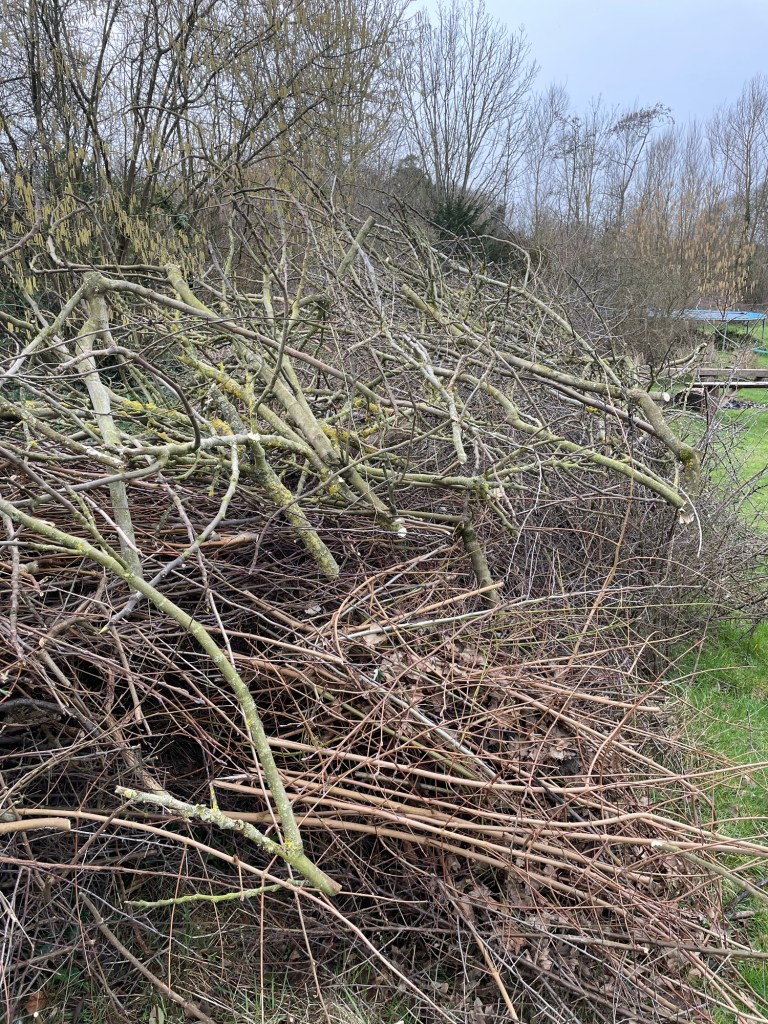
The last task of the day was clipping out brambles and wild rose runners from an area by the stream which has gouged its way down the hillside. The rush of the stream, and a Merlin helicopter heading towards Yeovilton airbase, were the only other noises.
As I made my way back to my cabin after supper, I could hear church bell ringing practice from a village far off in the valley. Last night, Butleigh’s church bells were in full swing and could be clearly heard through my open window. The penultimate sound tonight from beyond was a ewe’s baa. Lambing will be starting soon, so she’s possibly feeling a little uncomfortable within.
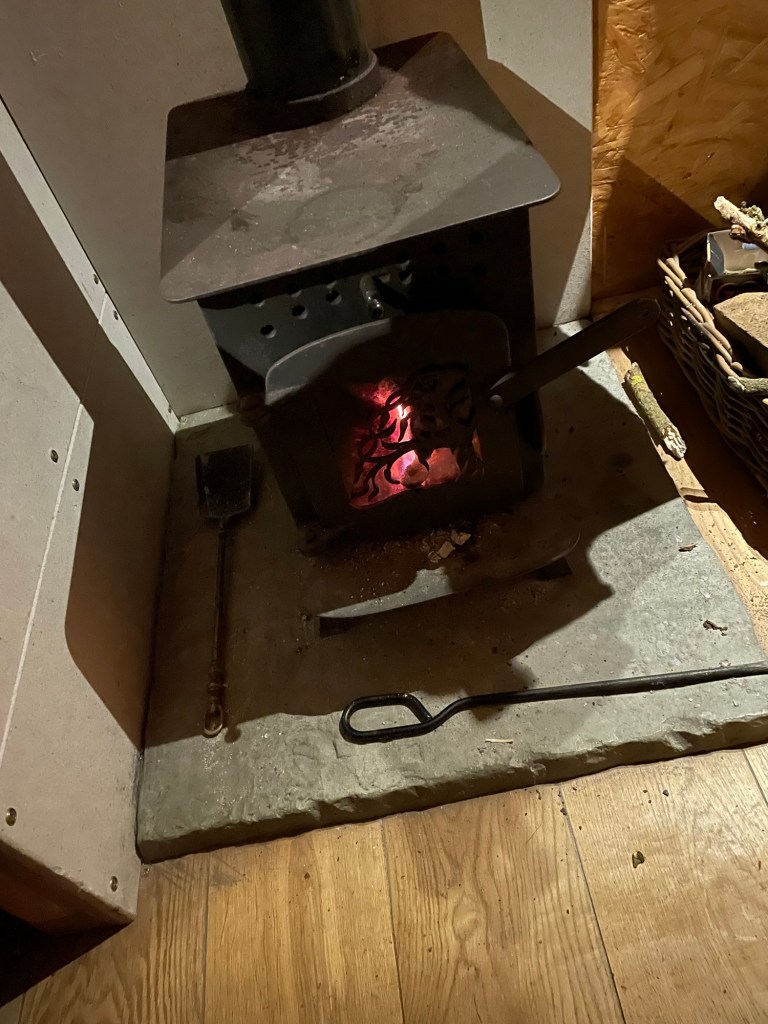
Inside the cabin, the noise comes from the wood-burner, when a burnt-out log falls into the embers. Silence to all intents and purposes, except for an owl out there, somewhere.
~
CLP 17/02/2026
 Journey of Words
2 responses to “Out West: Day 3”
commented on
I could almost hear the birds and the quiet rhythm of the day. There’s something so grounding about simple work, changing skies, and those small countryside sounds at night. Loved this glimpse of Day 3.
commented on
Thank you for reading and taking time to comment. I’m glad you enjoyed the piece. 🙏