From East Anglia to the permaculture garden is a matter of over four hours by train. The train out of Paddington was running about five minutes late when it pulled into Castle Cary, coinciding with a vicious shower.
I had discovered that buses don’t operate in the area on Sundays (against my naïve hopes) and an estimated £25 taxi fare for an eight mile trip seemed excessive, so I spent a few minutes digging my waterproof trousers from my kit bag in preparation for the hike.
Having sorted out the misaligned zip in the left trouser leg to get my still-booted foot through, I set off up the rise to the junction, greatly appreciating that the Tesco delivery van driver had driven round the huge pool of standing water accumulating by the pavement. A young woman heading towards the station, dressed for drier weather, was completely drenched by the spray of passing vehicles charging up the road. She seemed to be smiling in a slightly crooked way, the smile of someone who enjoys mild discomfort and a little bit of pain, but not too much, perhaps. The delivery van driver spared me a similar ducking through his considerate manoeuvre.
The road from the railway bridge towards Lydford-on-Fosse was collecting a lot of running water on my side, which meant walking facing oncoming traffic well out onto the tarmac. Better this, head up, fully visible to approaching drivers, than sploshing my walking boots in the bubbling stream. The rain soon stopped and the sun appeared. With a good three hours until sunset, I strode on alongside neatly sheared hedgerows, enjoying the sun on my face, the sound of birdsong after rain and the treat of vast expanses of crystal blue sky.
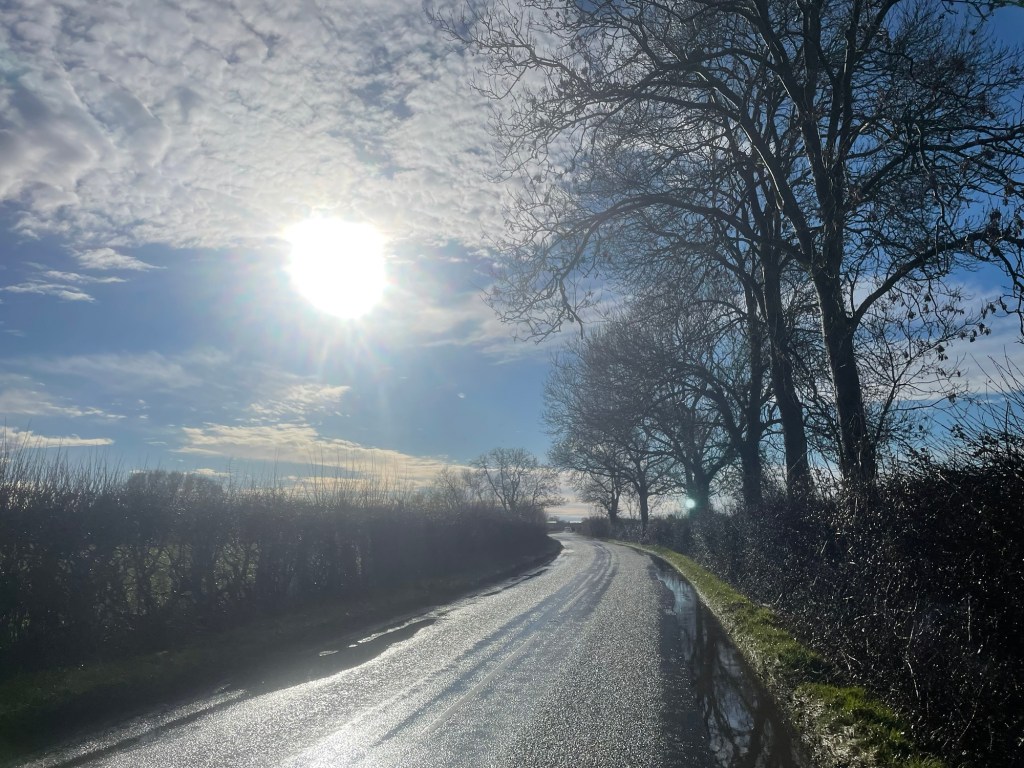
The road has few straight runs, so it was important to remain attentive to the noise of traffic as I made my way westward. I walked tall, making sure to look at the drivers as cars and vans came toward me. Most gave me wide berth, only one, a black Range Rover, neither slowed, nor moved very far out to pass me.
The hedgerows were black from the rain. There was very little hedge blossom, only tiny pale buds and minute, green leaf shoots. The sunlight exposed a disheartening quantity of litter in the hedging and the grass banking of the road and ditch. A surprising item was a large rubbery phallus floating in a puddle. It was surprising due to its sheer size and the fact it had most probably been slung from a car window. I’ll spare you a photograph. It’s probably still there, if anyone wants it. You will find it just east of the village of Lovington, which mildly amused me.
The height of the trimmed hedgerows was such that I could see the roofs of cars heading my way along the bends ahead and make assessments of where to step to stay safe and dry. I could also see across the fields, which were greening up far earlier than the bare soil of East Anglia. To my right a flock of starlings were gathering at low level. Not yet a fully formed murmuration, but lifting and falling as they do, in waves, chattering excitedly.
As I came to the edge of Alford a Buzzard drifted silently over the road only a few feet above my head, before it began its plaintive cry. The big bird’s calling provoked a huge disturbance of starlings. They rose up and joined a multitude streaming away from the setting sun, over the slate tiles of the sandstone cottages lining the street. The starling stream slipped by in bursts, strung out like a pianola music roll against the whitening atmosphere. Just when I thought I had seen the last few stragglers, another burst, then more stragglers flapping furiously in the chase, time after time, all heading to the Levels below Glastonbury, or similarly low-lying, wet ground.
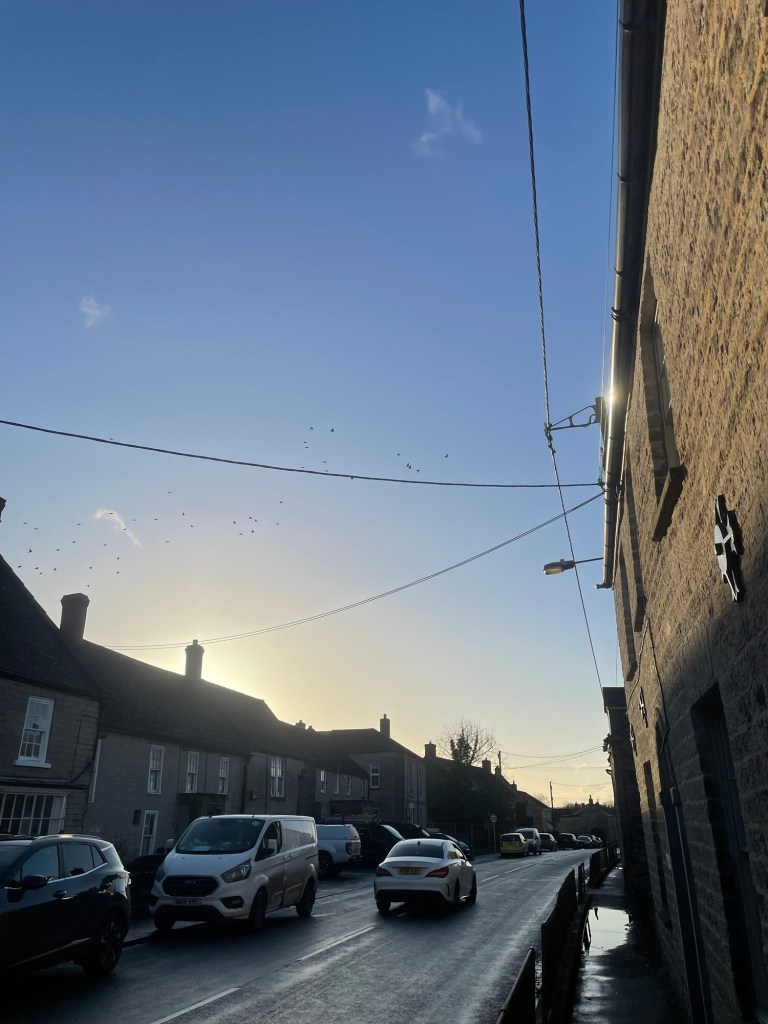
The Cross Keys at Lydford, or a neighbouring cottage, emitted the warm and welcoming scent of woodsmoke. I followed its trail into the pub, where a good natured clientele were enjoying their afternoon. The kitchen was closed from a few minutes before I arrived until six, I was told. I downed a pint of cider and crunched through a bag of crisps before crossing Fosse Way (A37), which is the old Roman road from near Exeter to Leicester.
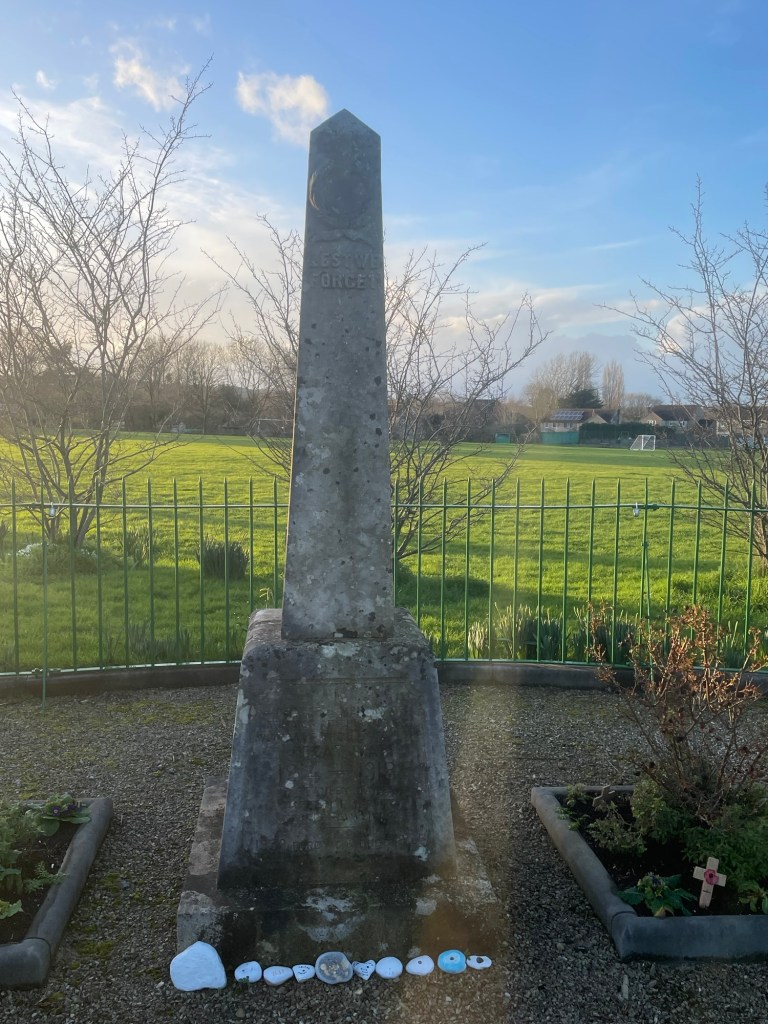
On the west-side of the Fosse Way, a few yards up the road, stands a limestone pillar engraved ‘Lest We Forget’. Lichen, weathering and the shade caused by the low Sun, made reading any further detail impossible – a reminder of time and tide never waiting, here for not even much over a century.
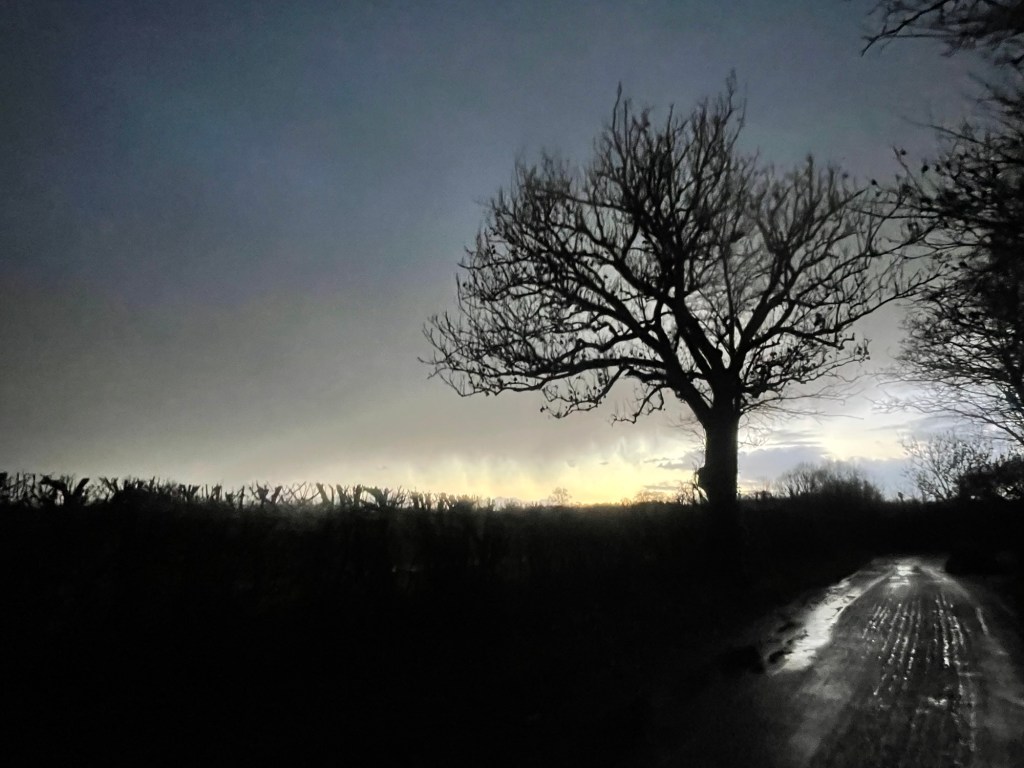
The sunset gave its best shot as I passed behind the two football pitches and turned into Barton Road. The inn car park, a forecourt, was full and the bar was warm and welcoming. Again, no food. Apparently, it is difficult to get staff. Again, a cider and crisps before the last mile in light rain and the gloom, to my home for the next ten days.
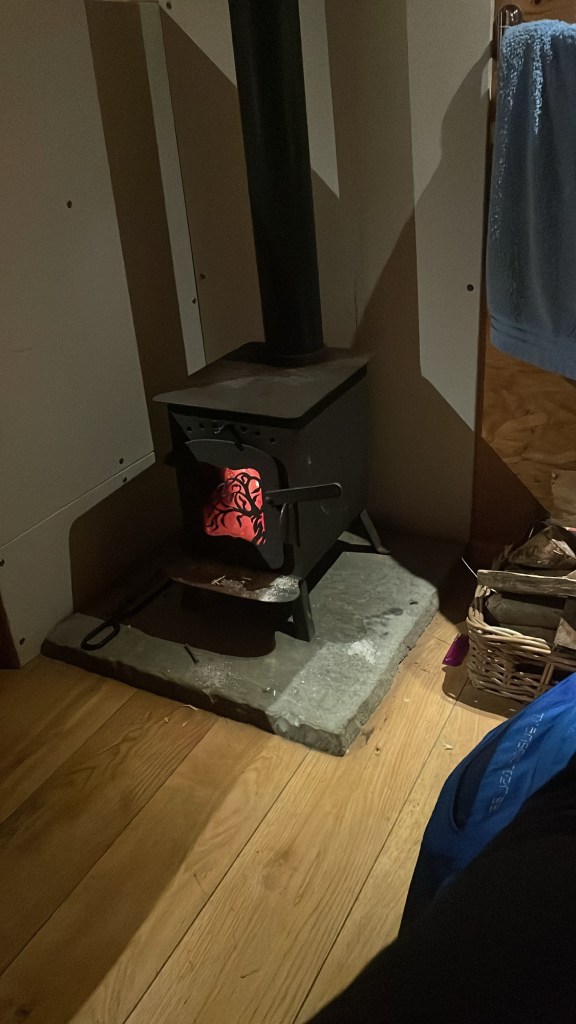
I walked around the small-holding as the last of twilight faded. Nobody about, so I set the fire and settled down to read.
~
CLP 16/02/2026
 Journey of Words
5 responses to “Out West: Day 1”
commented on
Lovely write my friend – sounds like a fab wee journey and a great experience so far 👍 Look forward to reading more ☺️🖤
commented on
Thank you. it’s a bit different. Not my first visit, but a place I love working at, if I can make time. Next piece is scheduled for 07:25h GMT.
commented on
Excellent ☺️🖤
commented on
Love it Chris. Cant wait for the next one. Crazy Lovington dildo story! You couldn’t make it up!!
commented on
Hopefully, the Lovington sex-toy mystery won’t be the highlight of this visit.