Sunset here takes place around twenty minutes later than in Norfolk, which was handy for my hike from the station yesterday afternoon. I made it to the permaculture garden with enough dusk to re-familiarise myself with the set up, enjoying the similarities and noting the differences since my last visit three winters ago. Of course things have changed, developed, improved, or indeed fallen out of use. They have in my life too.
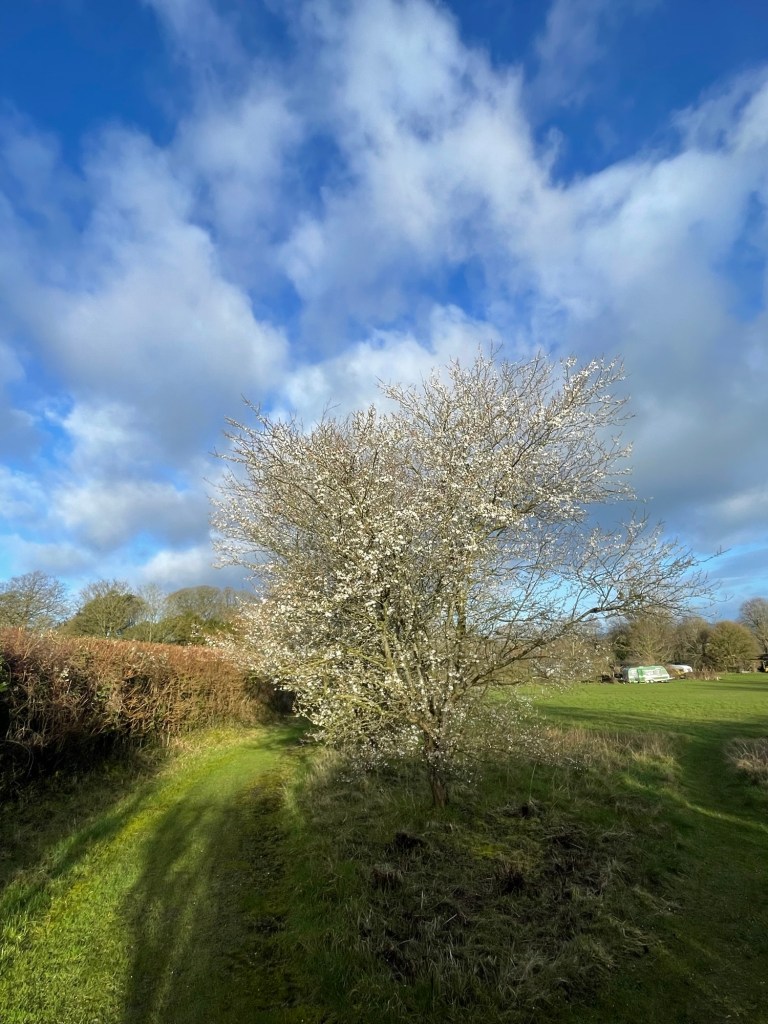
Here an extra caravan on Peace Field, a surprising addition on a margin of the sacred wildflower meadow, next to one of the orchards. That orchard itself, looks as if it has been thinned out, but I may be wrong. The other two on site, look healthy enough.
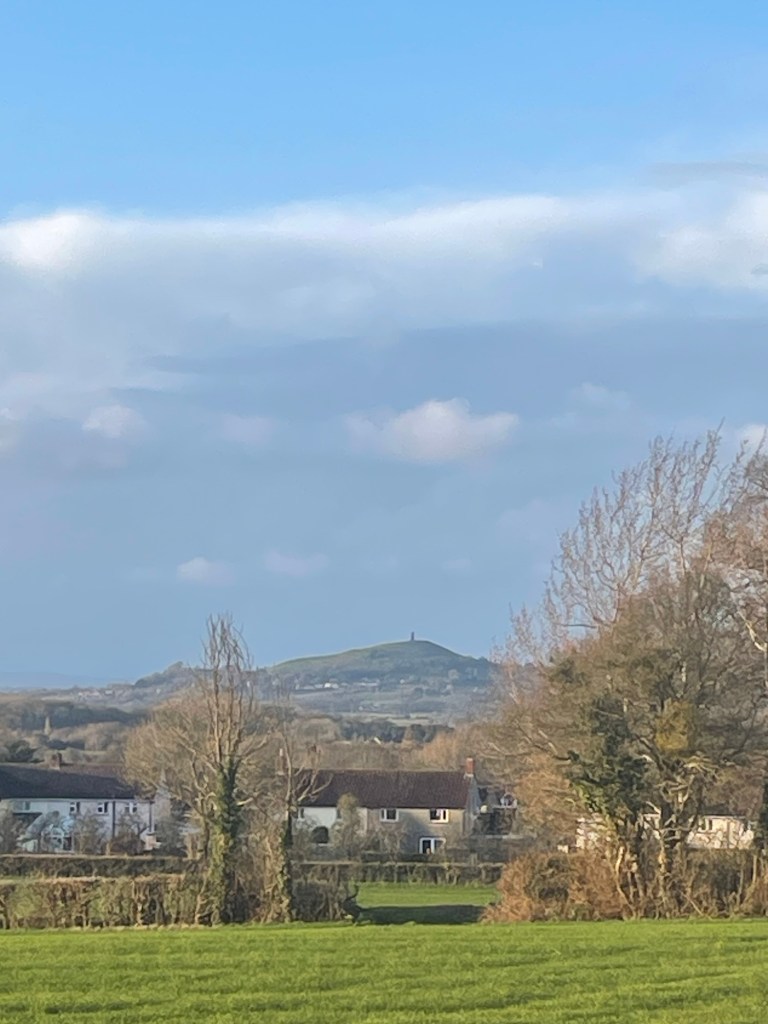
Security and privacy, solidity and permanence sum up the changes around the place. Security, sadly is an increasing need as the local attraction of Glastonbury, magnet for drifters, dreamers and the slightly deranged, means not every passing soul is settled psychologically, economically or socially. Building a community of like-minded people, spiritual searchers, needs careful collation. A certain amount of sifting is required, as well as clear boundaries and firm decisions, if a collection of people is going to have any chance of growing, individually and as a collective.
As one of the people here has seen first-hand on his stops and starts around Britain and Europe, greed, sloth, lust and exploitation of immature and vulnerable people is not uncommon in alternative social arrangements. Power is corrupting, so how power is wielded and distributed is critical in living off-grid in a communal fashion. Here volunteers come and go over a period of months until one, or another, finds they belong and are accepted to stay longer, possibly invited to remain. It is a special place, but being open-minded as the community is, does not mean they are an open door that any fool can waltz through.
The reason for this is that this is life on the land, living as part of nature, as best humanity can. The work that I help with here is about maintaining the bucolic setting for the people who live and visit. It is physical work, cutting, digging, planting, repairing, reconstructing, building, making, pruning, harvesting, producing, storing. Most of this work is carried out in the open air, or under makeshift cover. If one follows the old adage, no such thing as bad weather, just the wrong clothing, work can get done in nearly any weather sent by Thor. Certainly, if work needs doing, particularly a repair, or restoration of an essential utility, rain and wind often have to be battled. Dreamers and drifters don’t always grasp what hard labour is needed to enable successful off-grid existence. Which is where there runs a fault-line between dream and reality.
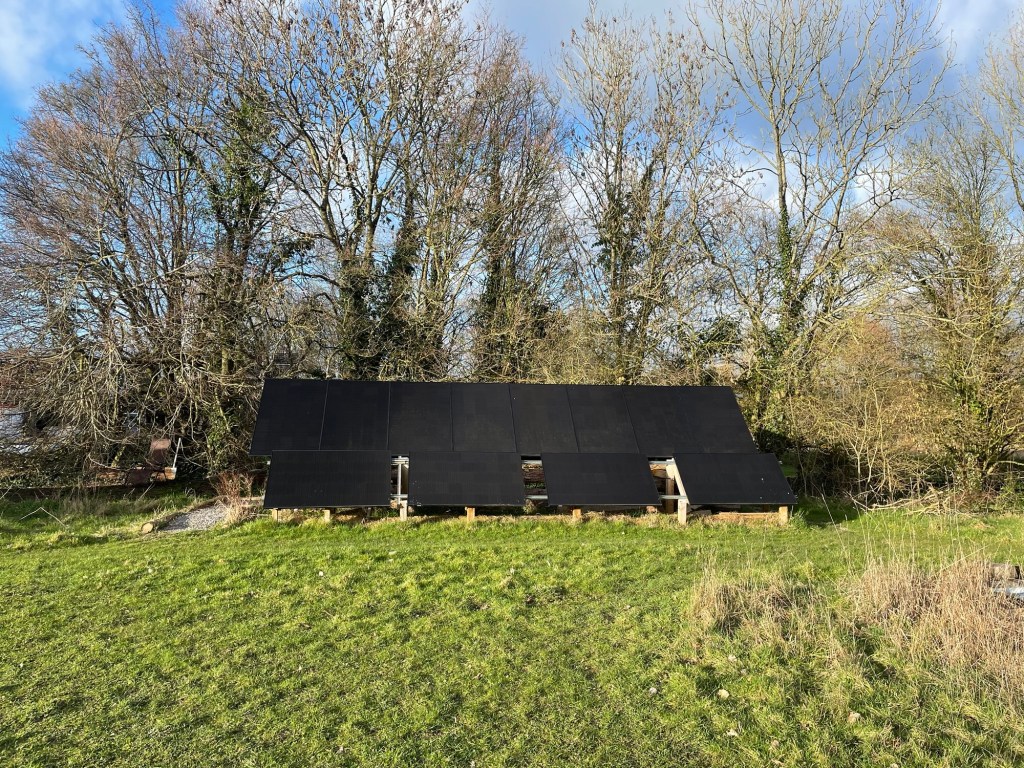
The garden operates on a loosely commune-like basis, with all permanent residents participants in big decisions, not least who gets to live here, but there is an accepted hierarchy. It operates primarily on the basis that the approval from the top is not easily given. Change must be as close to organic as possible. This means time is taken. Emotions are allowed to ferment in the decision-making period. Concerns are aired and reflected on. Fairness is considered, but overall, the health and sustainability of the community is the most important factor in decision-making. New is good, but not for novelty’s sake. New is good where it develops and strengthens, or allows exploration, or serious experimentation, which might benefit the group in the longer term.
What this all means in practise is simple: do what needs doing as the seasons dictate. Change evolves from what needs doing, when time permits planning.
When I first worked on a farm, back in Hampshire during the harvests of 1978 and 1979, I realised by the end of my time there that land-based work is unrelenting. Sure, machinery helps carry the load, but the turning world means nobody can truly rest for long when living on, or from the land. The only way to survive is to attune oneself to the pattern of the year. Thankfully, Britain has four recognisable seasons, (or did), so there is variety in the work, but that wheel can become a grindstone quite easily.
Here as well, remaining fit and healthy, so as to keep up with the seasonal cycle, is critical. The work helps establish a level of fitness and good health, but the human frame and its chemistry do not always match the required specification, which is where difficulties arise. Age too, is a factor, as in all work. For how long can one work effectively when so much work here is physical?
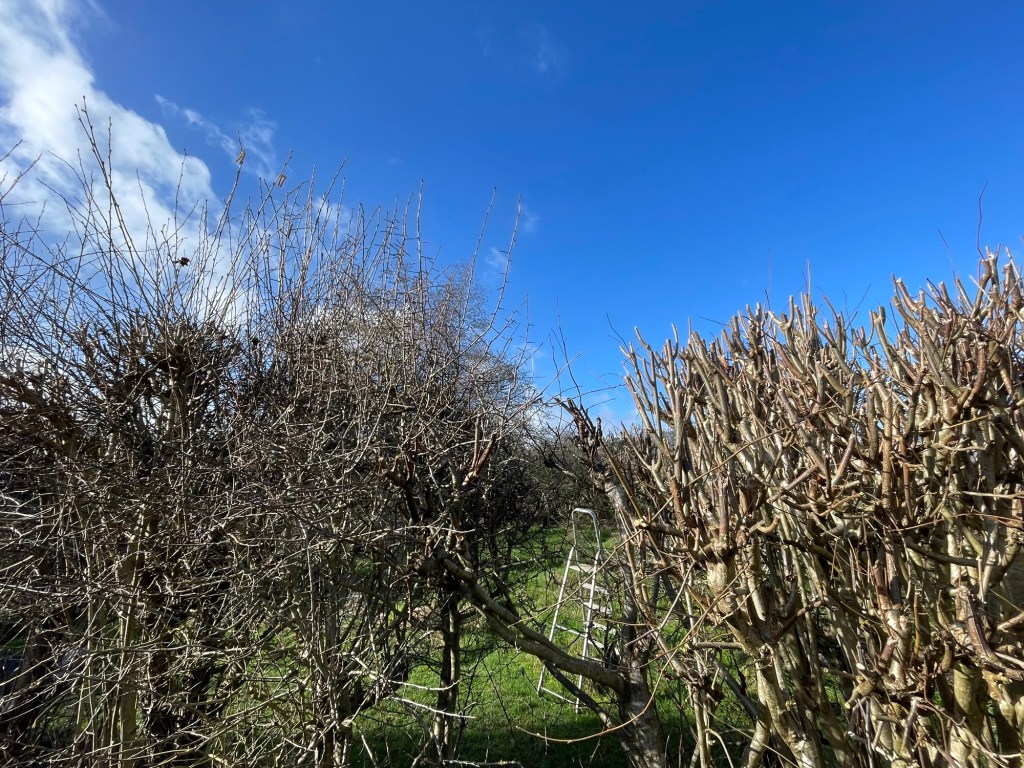
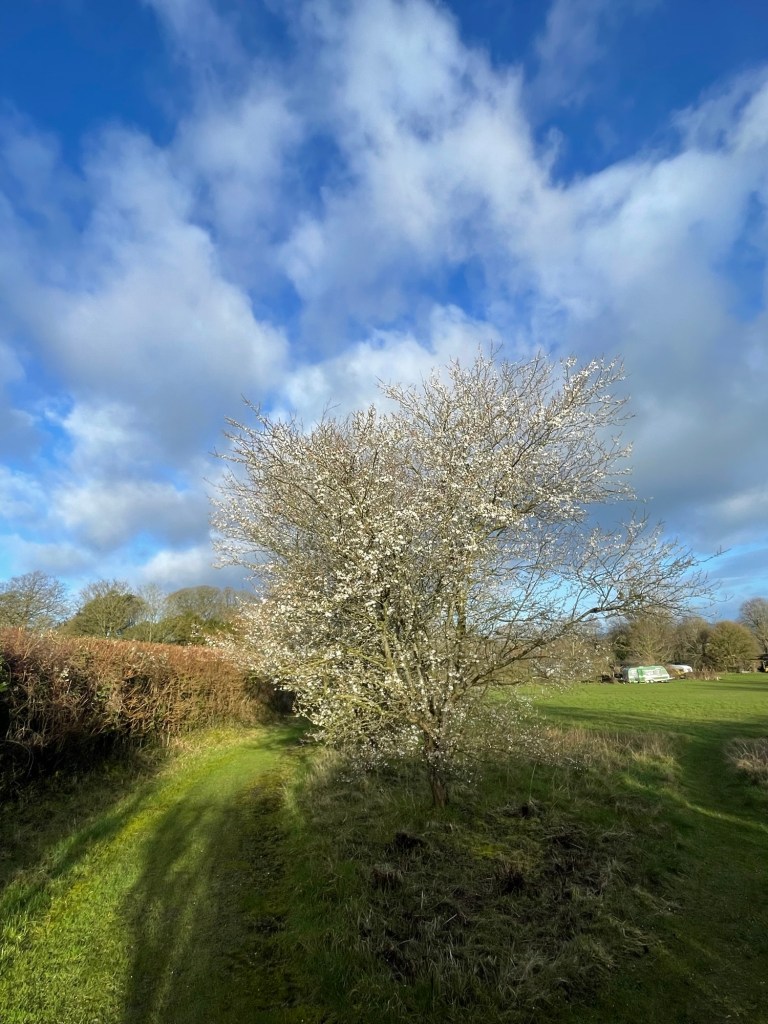
Today, my work, with one of the long-term volunteers, was to complete the hedge-cutting. It has to be done now, at the latest, so as to let the birds build nests when the new foliage bursts out. With the temperature on the up, humidity high and sunshine more common again, these hedgerows will be soon filling out. The buds are colouring up, green, purple, crimson. Already, honeysuckle is feeling its way into prime position among the beech, hazel, hawthorn and blackthorn. The cherry trees are blossoming. The birds are actively singing out their territories, calling for intimate company
After an extended day, clipping and gathering the cuttings, our work is eventually done.
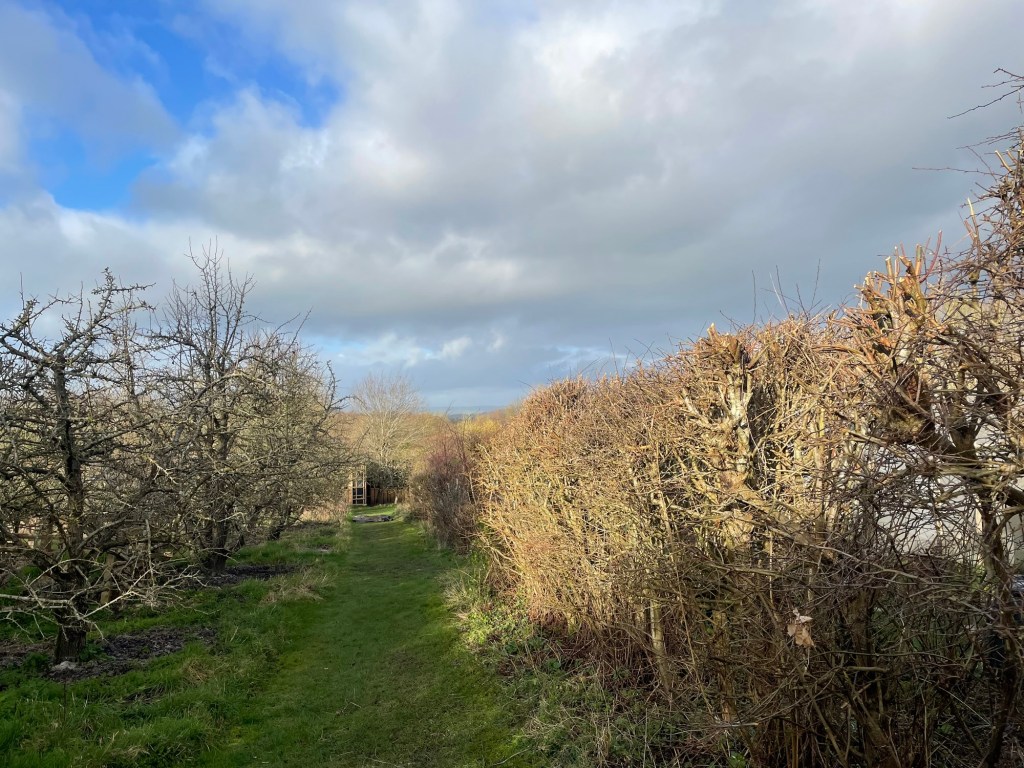
Before it got dark, I headed to the inn for some supper. They serve between 6pm and 8pm weekdays. On Saturday, a mobile chippy pitches up on the forecourt. As I mentioned yesterday, on Sunday its just drinks and packaged snacks.
CLP 16/02/2026
 Journey of Words