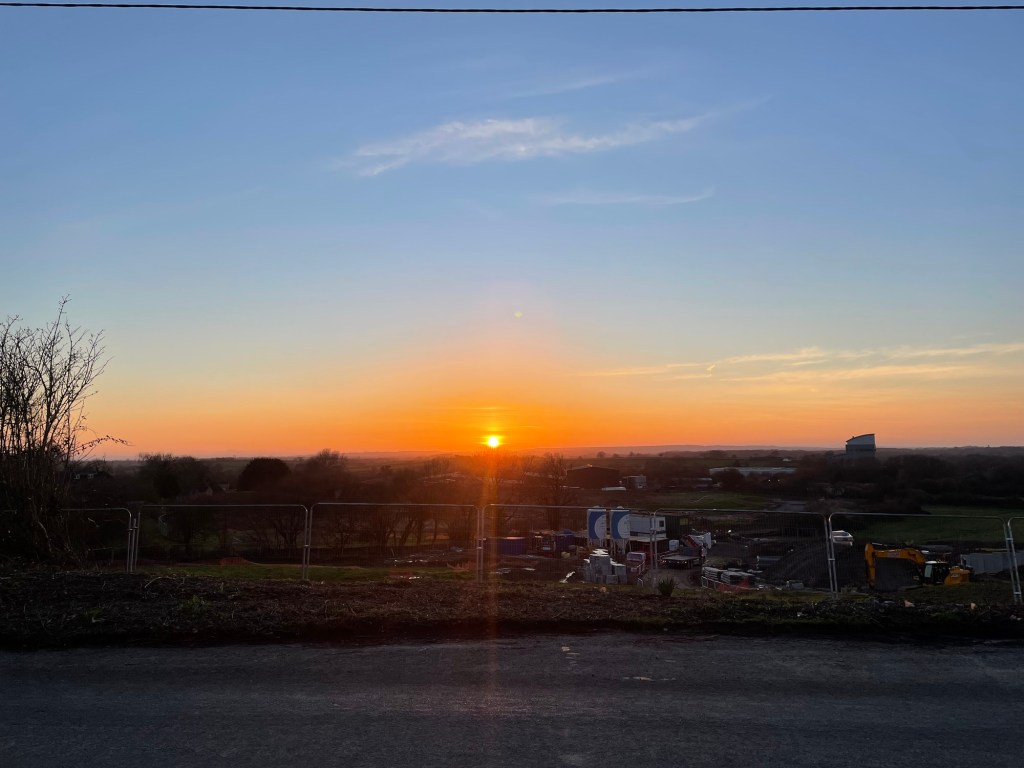
There are a few people around the country trying to live on the land, or at least off-grid. Relative to the total population of the UK, the number must be very small. Great Britain has long since passed the point at which its population is content with living this way, not least because it is so very physically demanding. Living in such close proximity to nature is tiring.
No living creature can afford to pursue activities that wastes its own biological energy. Tools have been developed and adapted and are only used to make things easier. A bad workman it is said, blames his tools. A good workman has the right tools, then knows how to use and adapt them to get the job done. This also means storing and maintaining them with care.
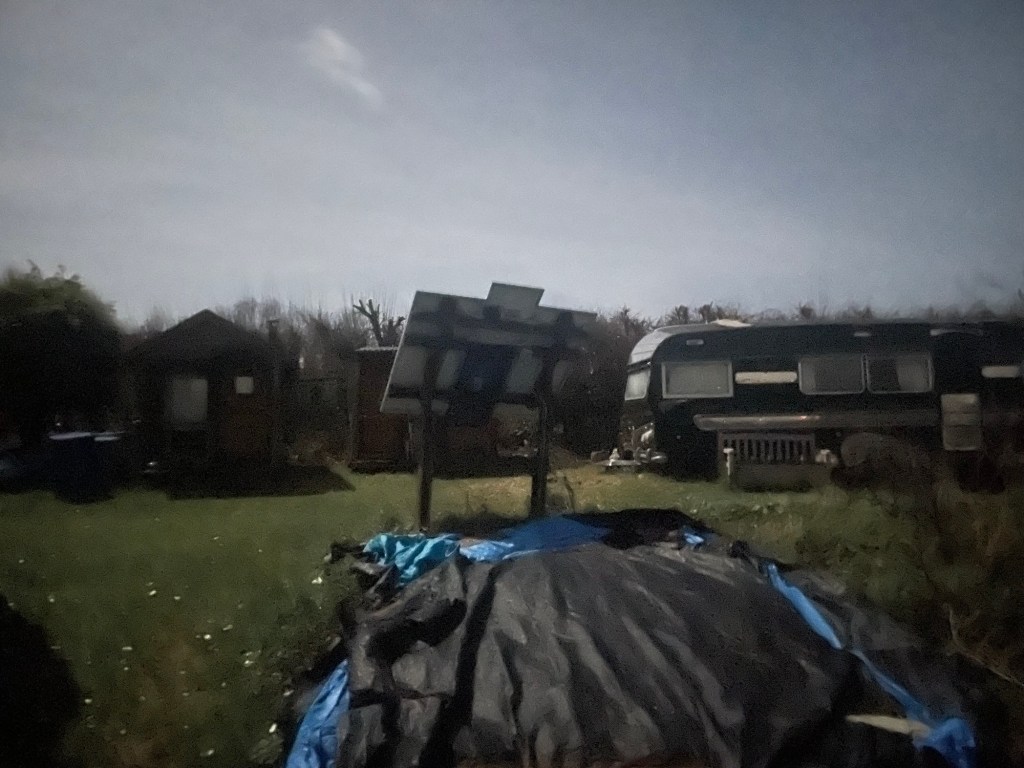
Tools are expensive and not everyone can afford a full tool box of the right gear for every job. This leads to a local culture of borrowing and lending specialist equipment, hiring and volunteering between like-minded people. For example, Karsten, who joined Sunday’s work party, brought his scythe to help clear around the saplings in Wild Lea. Dan and I used a brush-cutter to work through the Black Thorn along Bron’s fence line. Any support received is gratefully reciprocated in one form or another later in the year.
A neighbouring farmer owns one small and one medium-size tractor, together with attachable hydraulic equipment, both suited for heavy duty work on smallholdings. Ben has steady demand from people with little parcels of land, smaller hedged fields and camp sites. He has a symbiotic business relationship with his former employer, who deals with equipment hire for people with substantial landholdings by picking up those jobs that are too small for the huge machines used most effectively on agri-business farms. The two refer customers to each other where the customer’s needs are better served by the other, given the equipment available. Ben also helps his close neighbours on a voluntary basis, such as by cutting the roadside hedges using his tractor, in the knowledge that he can call on his neighbours when he needs some back-up which is more labour intensive than machinery suitable on his land, help he might possibly help during the forthcoming lambing season.
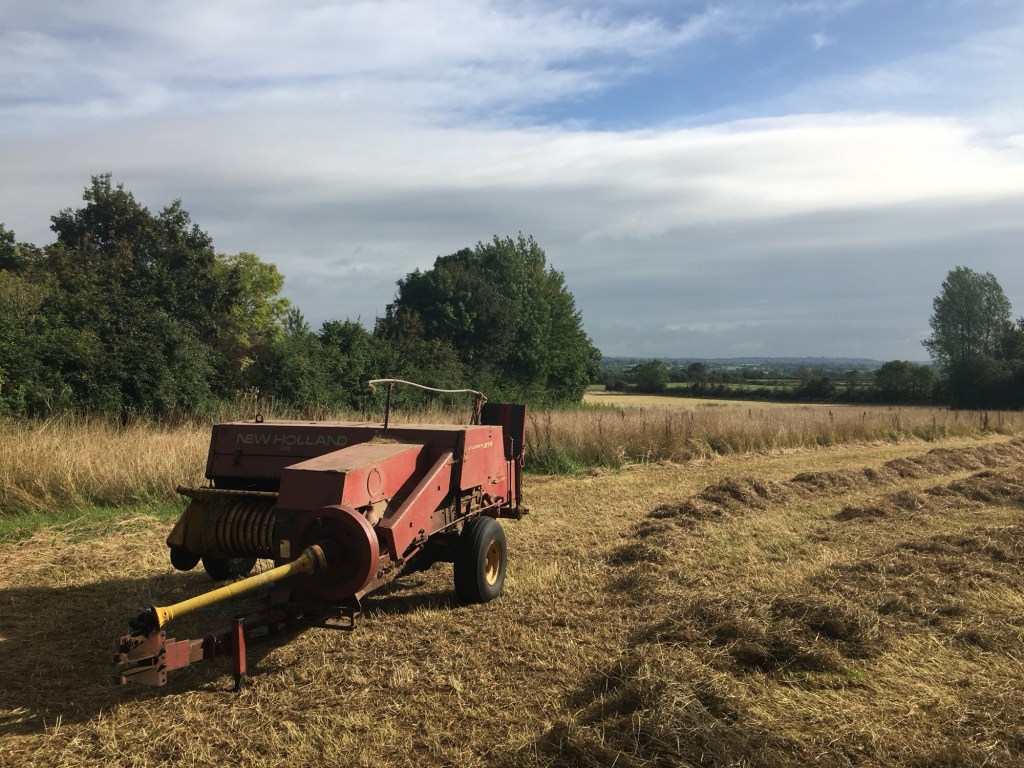
Mowing and baling the hay from Peace Field and Wild Lea are good examples of when Ben’s equipment and expertise is called upon by the good people of Avalon Permaculture Garden.
Even when something as simple as a fruit picker, (a long-handled device for grabbing apples, pears and plums from the highest points in the orchard), is needed, knowing who has one can be handy for optimising the harvest. The rule when borrowing is to always give the kit back as soon as the work is complete. Word quickly gets round about those who do not return tools. For the lender, too generous a disposition can also lead to problems, particularly if holding no memory of who equipment was lent. The spaces in a toolshed may well reflect holes in the memory.
The permaculture garden is not big enough to need a quad-bike to get around. Shank’s Pony and a wheel-barrow does the job well enough in the main, although a large 4×4 and a trailer are essential for the heavier transporting tasks. Forgetting to include something, requiring steps to be retraced, is only natural on occasions, but wastes precious time and energy. One soon learns to think ahead and concentrate, thus saving tramping back and forth during the precious hours of winter light, or during a rainy day. The longer the distance between job and shed, the better the planning.
America’s first white-faced arrivals found to their ultimate cost that failing to get on with the local people was bad news. Local knowledge about the land, how to work it, sustain it, live from it and ultimately survive is invaluable. Many animal species survive as commensal feeders, able to find food by being in the orbit of other species, as gulls do when following the plough, of taking discarded chips from the pavements of Prince of Wales Road in Norwich.
The back to the land life-style would be immeasurable tougher if the chosen location was remote. It’s madness to think otherwise and it’s deluded to think one can live as a recluse outside the community. Flood, fire and illness are best dealt with cooperatively, as is child-rearing. Setting up in an alternative life-style is best done where others have chosen this path too. Which is why Glastonbury, the West Country in general, parts of mid-Wales and Norfolk draw people wanting to live differently, yet they all have to draw on established society to get on their chosen way. The first obvious connection is around supplies of petrol and diesel.
The Internet does a wonderful job of informing and connecting people, but is no substitute for being with people who believe the same truths.
On the permaculture garden, one has to learn to think ahead. What is the job? Where is the work? What might I need, including how many people are needed? How long will it take? What is the weather going to be like? What else can I do if this can’t be done?
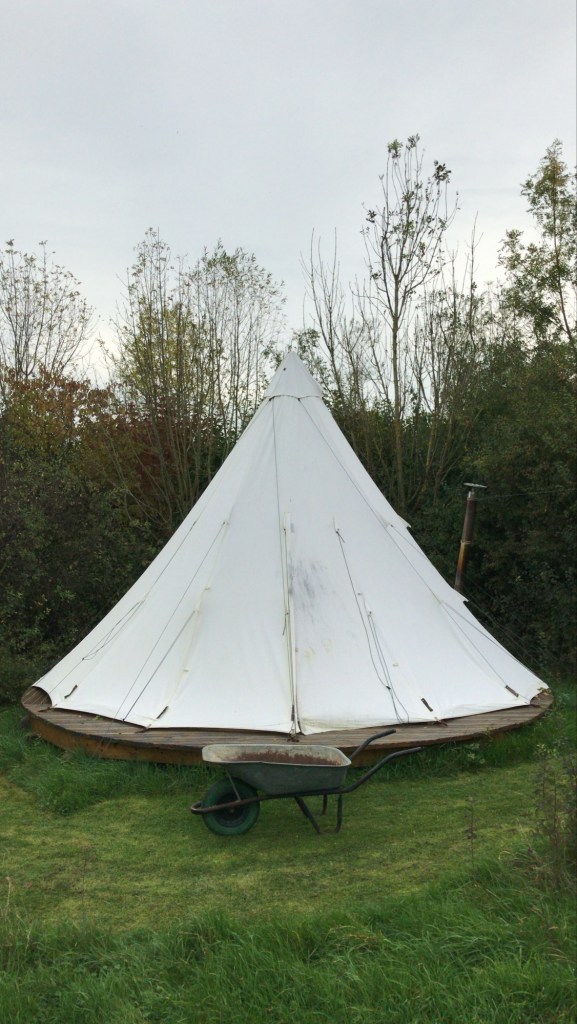
Being out in natural surroundings is uplifting while you are healthy, fit and youthful, but age is the silent enemy. If you live your young life outside the umbrella of HMRC, off-grid, self-sufficient, bartering and reciprocally scratching backs, there will be no National Insurance payments accruing in your favour. What happens when pensionable age is reached, when limbs stiffen, muscles weaken, when hospital visits become frequent? Resentful, as you might be, the net of Social Security is out there for everyone in the country, for those who are part of it. Council Tax has to be paid for roads, street lighting, rubbish collection, (you can’t burn it all), and the police, (like them, or not). Pensions don’t get paid out, unless some payments are made in at some point. APG and its community pay their way, it would naïve, or stupid to do otherwise because in the end nature wins.
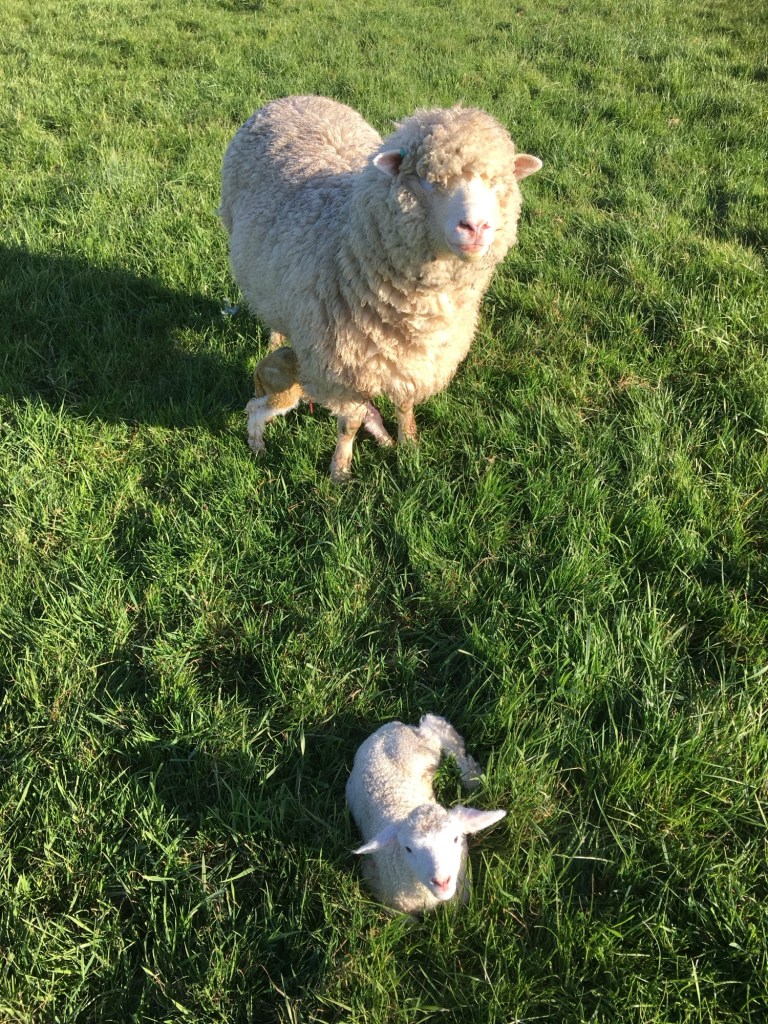
Being there when the first lamb starts bleating, the honey bees appear en masse, or the first sliver of the New Moon is visible is uplifting. Where one might miss these moments living in a city centre, it does not preclude appreciation of them, which is why walking and hiking. camping and glamping, fishing and boating, cycling and motorhomes are increasingly well patronised activities. Anything that slows the pace and affords better connection with nature and the seasons is good for the soul, as so many of us discovered, or remembered during the pandemic lockdowns.
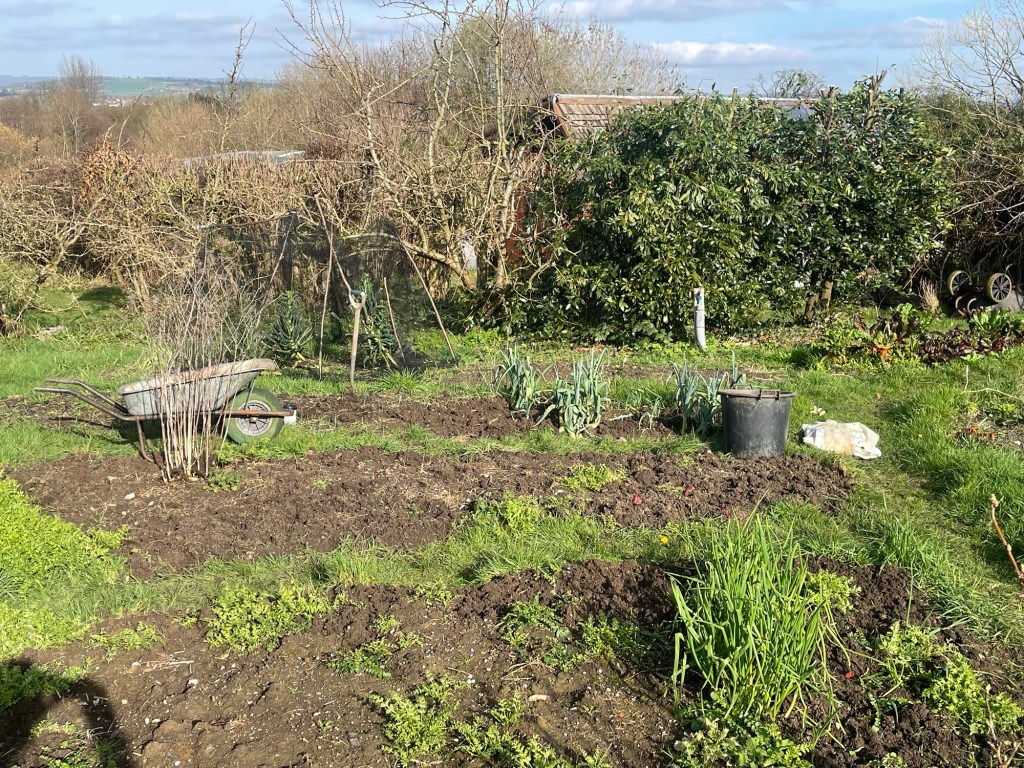
Choosing life on the land is a luxury. Can you afford the land? What savings can you draw on? What property, or wealth might you inherit that could help sustain the life-style? What education and skills have you acquired to allow an income to be generated? Can you afford to stop? Will your land have value if you need to leave it? What will happen to it all?
These are the big questions and it takes time to work out how to respond. During that time the ageing process ticks on, season by season. Living on the land is a privilege. How many more times might you see Spring come round? Enjoy this one, enjoy the subsequent Summer, take in the harvest come Autumn, celebrate the next Winter Solstice. Count your blessings.
~
n.b. With thanks and love to everyone in the Avalon Permaculture Garden community for giving me the opportunity to work alongside you for short periods over these past six years.
CLP 28/02/2026
 Journey of Words
3 responses to “Out West: Concluding Thoughts”
commented on
Great wee write my friend – thought provoking indeed. Those lambs are very cute too! 😉🖤
commented on
Thank you. It was an archive pic of the ewe with lamb. I took it in 2019 when on a farm near Ilminster. I should have kept a journal for that adventure!
commented on
I feel a wee travel book brewing!! 😊👍🖤