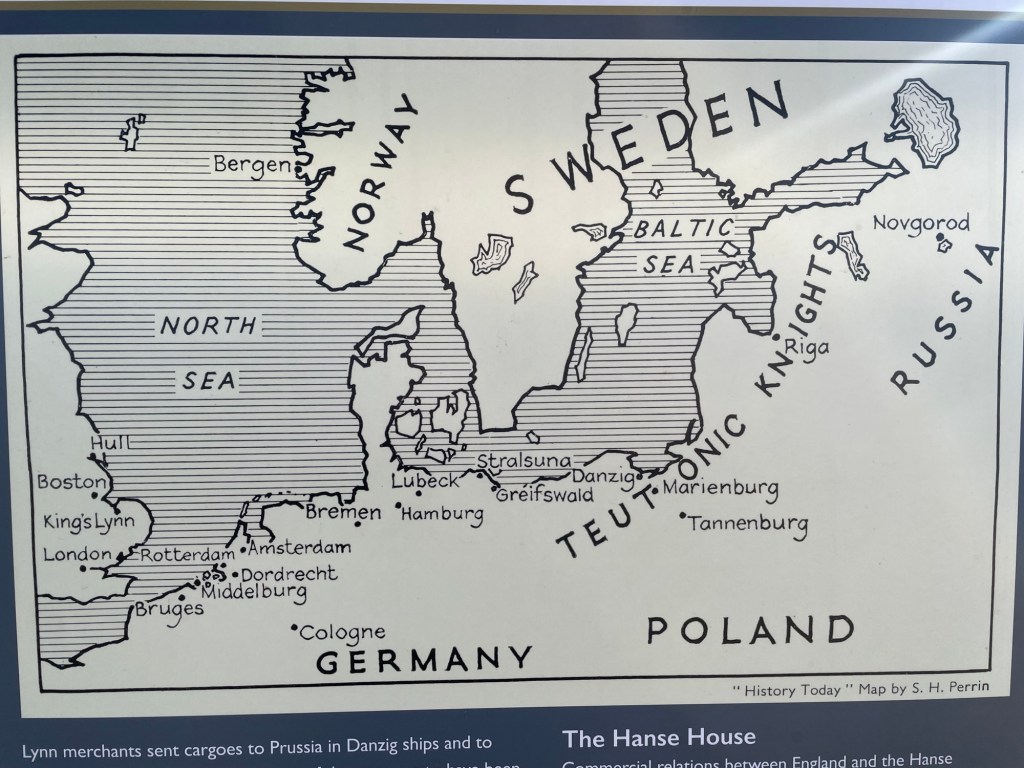
These medieval cities knew that trade brought wealth and wealth buys power, so they established a supranational trading league of their own. With their own navies and troops, based in fortified ports fringing the Baltic and The German Sea, as the North Sea was formally known, the Hanseatic ports were a formidable consortium. Much of what Venetians could do around the Mediterranean, The Hansa could do in northern waters.
England’s island mentality, its archaic monarchal government, was of course a problem until subdued by conflict, after which The Hansa gained property and unique trading rights in some major English ports, not least in the heart of London itself. This was an arrogant statement of their wealth and status, not unlike Russian Oligarchs lording it in modern London under the Tories.
The trading of wool through East Anglia, established Boston and Lynn as power bases within the league. Yarmouth, Worsted and Norwich, which had its own mint, were rich enough to think independently of the monarchy and Parliament from time to time. From Boudicca, then Hereward the Wake, the Lollards and Kett, even the English Revolution leading to the execution of Charles I in 1649, East Anglia has often shown independence of mind, until finally subsumed into England and Conservatism as the Crown under James I and Dutch engineers drained The Fens and enclosed its people. The Restoration of 1660 nailed the lid on further rebellion, although Norwich, at one time the second city of the kingdom, still looks askance at London, irrespective of the looming, great Norman castle.
Trade in wool underlined Lynn’s place in the Hanseatic League, perhaps comparable to the way oil has made tiny city states rich around the Arabian Gulf and Arabian peninsular. Wealth without the means to defend it is a chimera and England fell short in defence when trading disputes arose across the sea.
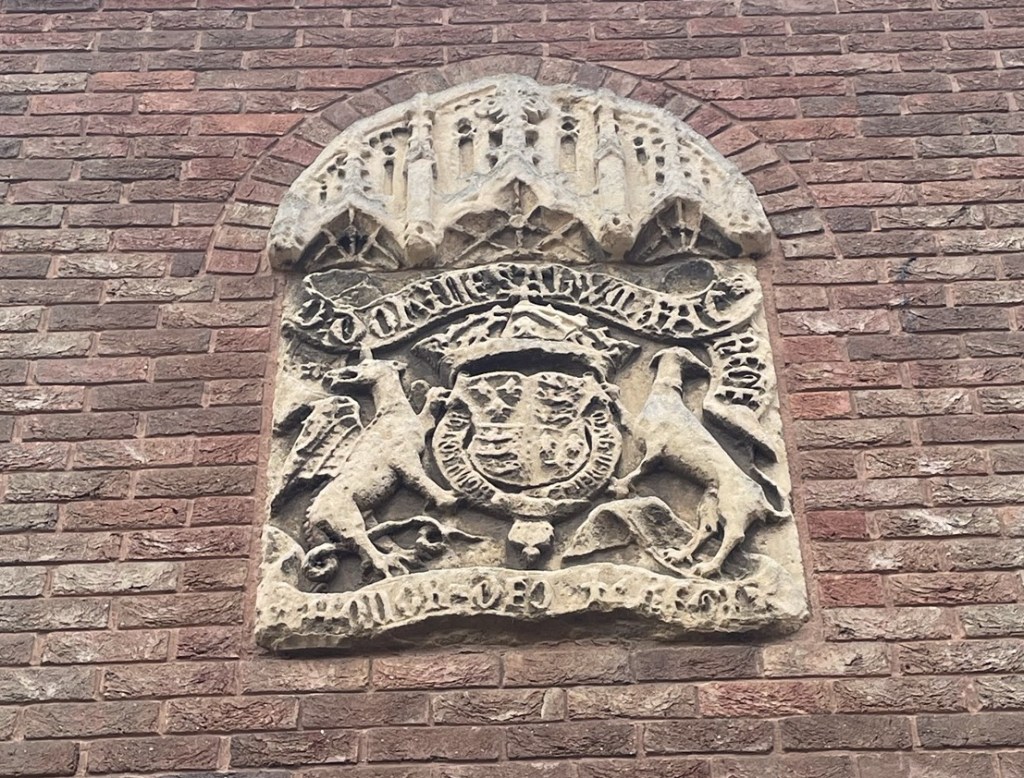
As a result, until the wool trade faded, Lynn, (then Bishop’s Lynn, before being targeted by the rapacious, serial killer, Henry VIII, thenceforth, King’s Lynn), accumulated many of the characteristics of Germanic towns. When you find yourself in the extensive Tuesday Market square, comparisons with the look of Baltic cities are unavoidable.
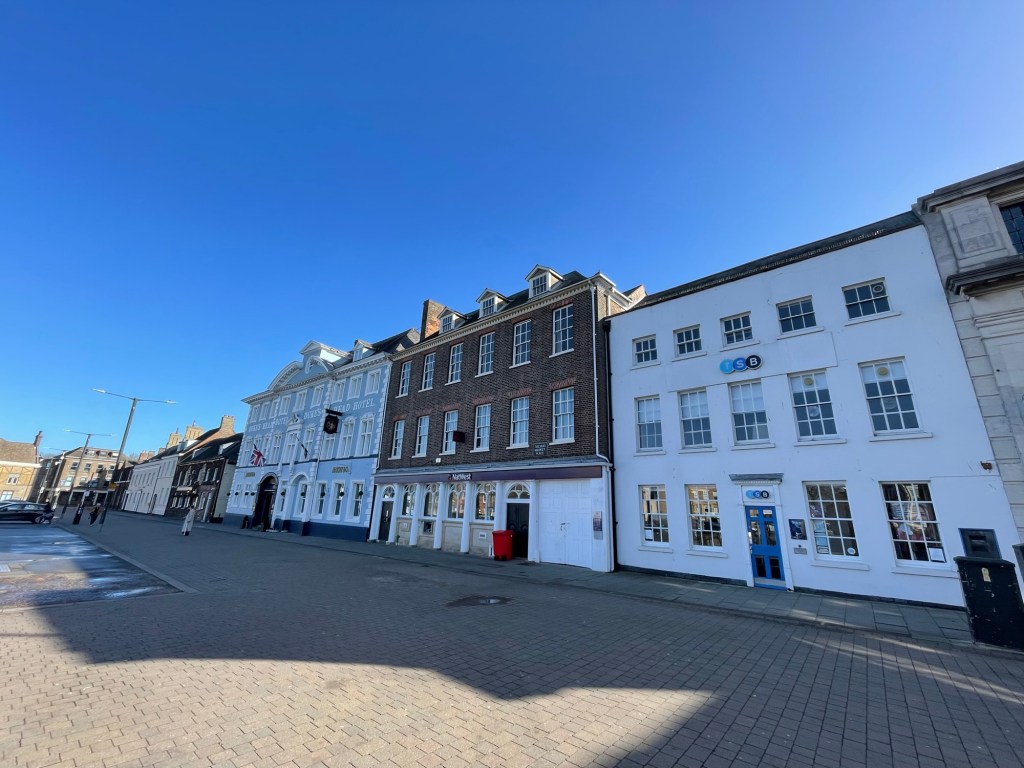
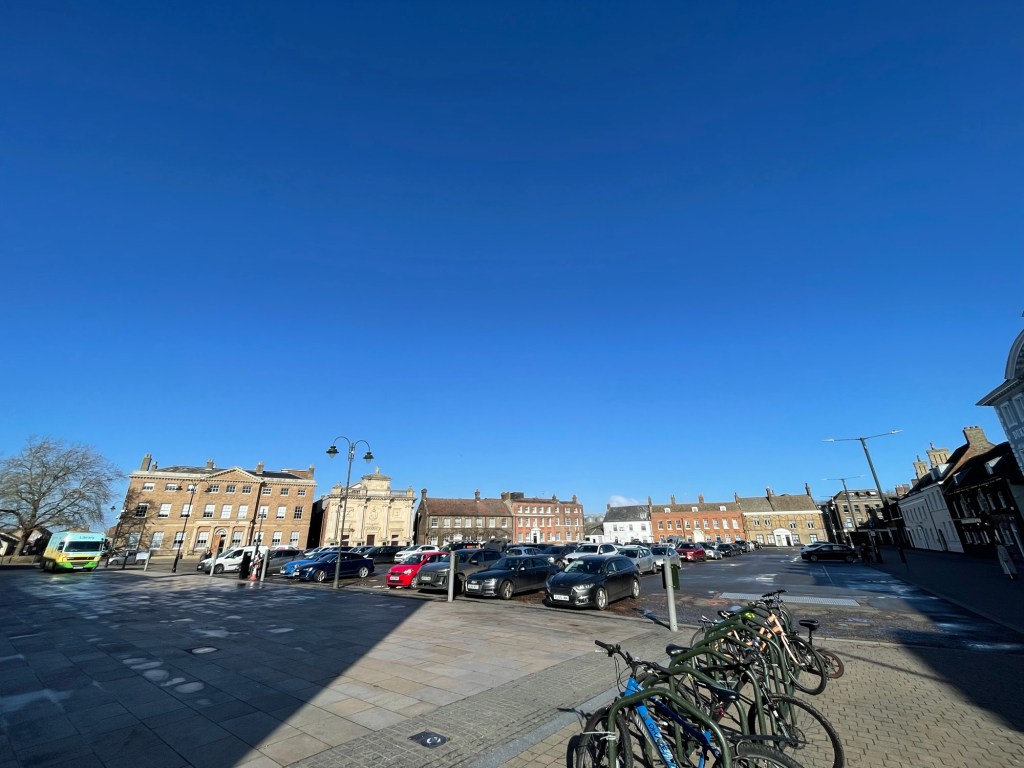
Arriving by train, there is little to indicate that medieval architectural gems can be found here. Walk toward the old quay abutting The Great Ouse river and you’ll find plenty.
Blessed by a Mediterranean-blue sky, enjoying the markedly longer hours of daylight, we wandered about. Seeking places seen on a childhood visit is a good test of memory, but more than fifty years passing cannot totally expunge the powers of recognition.
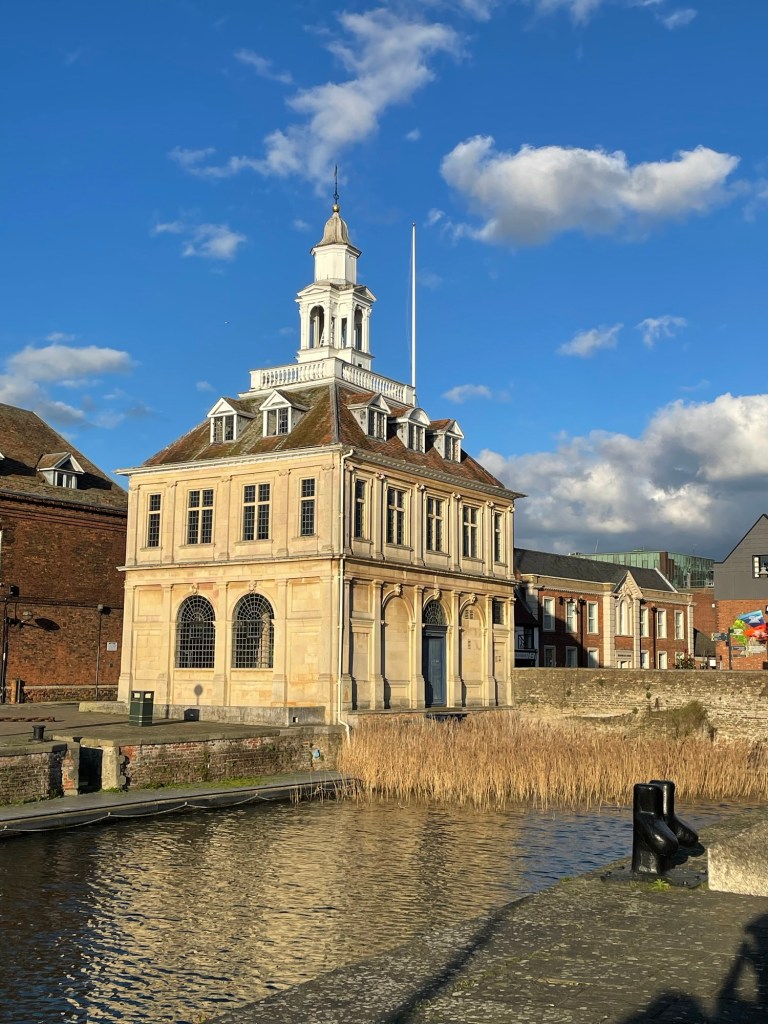
One of the most distinctive buildings in the whole of England, sits by the medieval South Quay. The C17th Custom House is a work of balanced detail, with a cupola central to its design. This building saw Lynn thrive as a major port for agricultural produce, but has since witnessed its commercial decline.
My previous visit to the town was quite recently. It was going through a period of change, which has led to its revival. As soon as their home countries aligned with the EU, workers from eastern Europe came to work on the surrounding land and in the food processing factories along the banks of the Great Ouse. These workers brought disposable income back into town, opened their own businesses, paid their fair share of Council Tax, while lowering the age profile of this part of Norfolk, which is on the verge of population collapse. Families that followed these hard-working immigrants have added immeasurably to the rich diversity of the population and the revival of its spirit.
I couldn’t quite believe how clean and tidy the streets are kept. Daytime wanderers and shoppers were in good number. There was no longer the feeling of a town on the slide. There are still many people on low incomes with disabilities that come from smoking, alcohol and ageing, or from having served in the British Army, but the mix seems better. Like so many English towns at a distance from the congested rat race of England’s south-east, people seem familiar with their neighbours and prepared to make time for each other and visitors. Like any conurbation, the town has its difficulties and difficult people, but in the bright sunlight it was easier to see the smiles and hear good-natured conversation, than not.
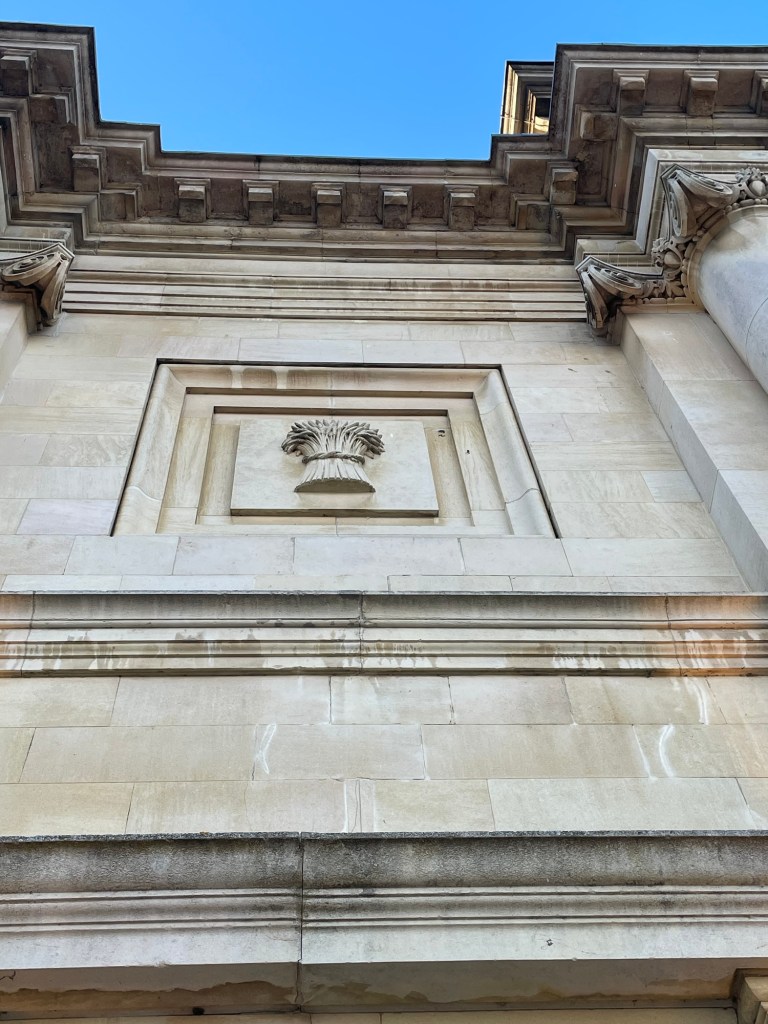
The Corn Exchange, appropriately its stone facade the colour of ripe wheat, is on the west-side of Tuesday Market. Its striking form underlines the port’s historical importance as a trading post for staple produce. A picture of the exchange dating from the start of the C20th shows it bustling with men making contracts to sell and buy wheat. The exchange floor is now reworked into a theatre and two screen cinema.
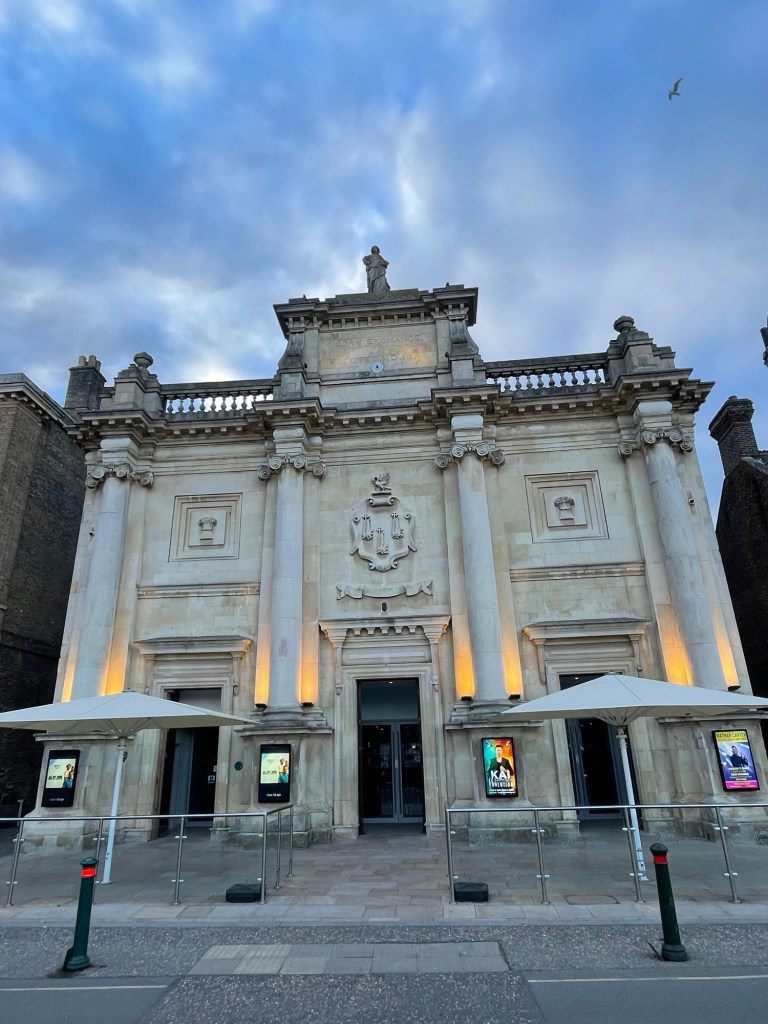
We had a bit of time free before dinner, so popped in to watch a new English film, Mother’s Pride. Made on a low budget, featuring actors recognisable from television comedy shows it portends to be a comedy. Having actors experienced in comedy starring in a film doesn’t actually make it a comedy. A less predictable script would have been nice. I laughed more during the latest Hollywood interpretation of Wuthering Heights. It is safe to report that Mother’s Pride will not be winning any Oscars.
Dinner at Mem’s Kitchen on Saturday Market Place was enjoyable. The food came in decent sized helpings, was very tasty and good value for money. After a post-prandial stroll around the town, it was bath then bedtime.
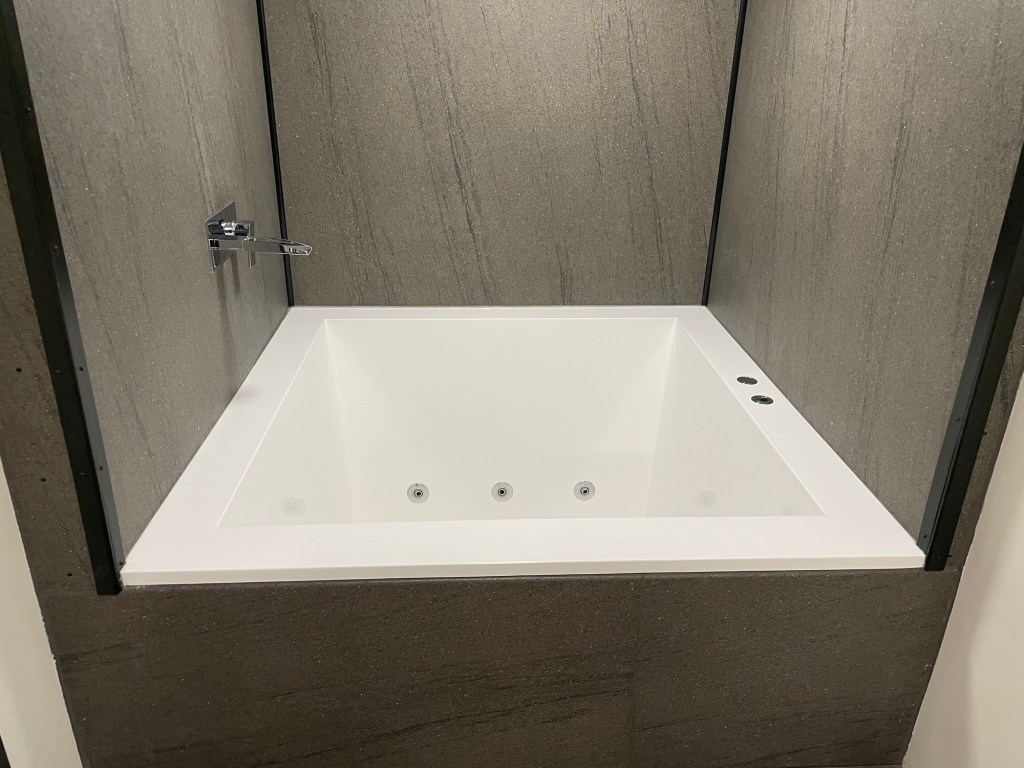
I was slightly thrown by my partner’s comment, “I wonder if you can fit four in here?”
“Who had you got in mind?” I asked her.
You can be too liberal-minded in King’s Lynn, they have been known to burn witches here.
~
CLP 10/03/2026
 Journey of Words